| Project Details | Information |
|---|---|
| Time Required | Half day (3–4 hours) |
| Estimated Cost | $20–$40 using pine or plywood |
| Key Tools | Saw, drill, clamps, square, sandpaper |
| Difficulty Level | Beginner |
| Best Wood | 3/4″ plywood or pine |
Building a DIY wooden toolbox is one of the best first projects for any beginner woodworker — it uses basic materials, requires only common tools, and produces something you will actually use every day in the workshop. A well-built wooden toolbox keeps your tools organised, protects them from damage, and gives you a satisfying first build to be proud of.
This free plan covers the complete build from design through to finishing — using 3/4-inch plywood or pine available at any hardware store, and basic hand or power tools. No joinery experience required.
What this free toolbox plan covers
- How to plan your toolbox dimensions around your actual tools
- Which wood and fasteners to buy and what to avoid
- Cutting and preparing your pieces for clean assembly
- Assembling a square, rigid frame that won’t rack or wobble
- Adding a handle, optional lid, and internal dividers
- Finishing options — paint, stain, or clear sealant
⏱ Reading time: about 6 minutes · Difficulty: Beginner
Step 1 — Plan your DIY wooden toolbox design
Before cutting a single board, decide what the toolbox needs to do. A toolbox built around your actual tools will always outperform a generic design.
Assess your tools
Make a quick inventory of the tools you plan to store. Focus on your largest items — a hand saw, level, or cordless drill sets the minimum internal dimensions. A common beginner mistake is building a box that is just slightly too small for the tools it needs to hold.
Decide on portability
A portable toolbox should be compact and lightweight — pine or thin plywood keeps the weight down. A stationary workshop caddy can be larger and heavier, built from 3/4-inch plywood for maximum durability. Decide which you need before buying materials.
Sketch a basic plan
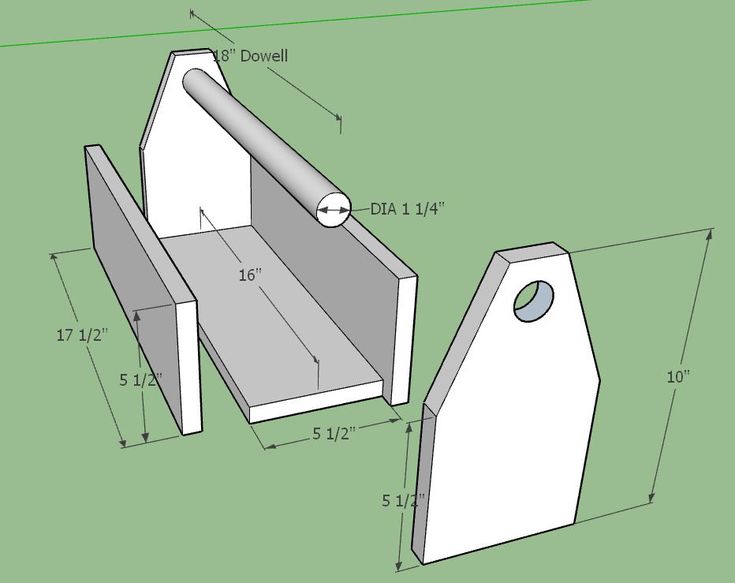
Sketch your desired length, width, and height with a pencil and paper. A standard beginner toolbox runs 18–24 inches long, 9–12 inches wide, and 9–12 inches tall. Add notes for any features — dividers for chisels, a tray for screws, or a centre handle. A simple sketch prevents costly mistakes at the saw.
Step 2 — Gather materials and tools
Getting the right supplies before you start prevents mid-build hardware runs. Here is what you need for a solid DIY wooden toolbox build.
| Material | Quantity | Notes |
|---|---|---|
| 3/4″ plywood or pine board | 1 sheet or 3–4 boards | Base, sides, front, back |
| 1-1/4″ wood screws | 1 box (50 count) | Assembly |
| PVA wood glue (Titebond II) | 1 bottle | All joints |
| Dowel or handle hardware | 1 piece | Centre carry handle |
| Sandpaper (120 + 220 grit) | 1 pack each | Surface prep and finishing |
⚠ Safety rule
Always wear safety glasses when operating any saw or drill. Secure your workpiece to the bench with clamps — never hold small pieces by hand while cutting. Do not wear loose gloves when using power tools; they can catch on rotating parts.
Step 3 — Cut and prepare the wood
Precision at the cutting stage makes every subsequent step easier. Sloppy cuts create gaps in joints that no amount of glue will fully fix.
Measure and mark
Using your sketch, measure and mark cut lines on your wood for all five pieces — base, front, back, and both sides. Write the piece name lightly in pencil on each board. Follow the measure-twice, cut-once rule on every single mark.
Make the cuts
Cut each piece carefully with a circular saw, table saw, or handsaw. Work for straight, square cuts — a speed square clamped as a guide fence makes circular saw cuts far more accurate. Sand all edges immediately after cutting with 120-grit paper to remove splinters before assembly.
Step 4 — Assemble the toolbox frame
Assembly is where your DIY wooden toolbox comes together. Work methodically and check for square at every step — a racked frame cannot be fixed after the glue sets.
Attach sides to the base
Apply a thin, even bead of PVA glue to the bottom edge of one side piece. Position it on the base, clamp it in place, pre-drill your screw holes to prevent splitting, and drive in your screws. Repeat for all four sides.
Check for square
After assembling all four sides, use a speed square to check every corner is at exactly 90 degrees. Measure diagonally corner-to-corner in both directions — if the two diagonal measurements match, the box is square. Adjust before the glue sets.
Add internal dividers
Cut dividers to your planned dimensions and glue and screw them into place from the outside of the box, countersinking the screw heads flush. Wipe all excess glue squeeze-out immediately with a damp cloth — dried glue prevents stain and finish from absorbing evenly.
Step 5 — Add the handle and apply a finish
The handle and finish are the final steps that turn a raw box into a proper DIY wooden toolbox ready for the workshop.
Attach the handle
Centre your handle on the top or end of the toolbox. A wooden dowel running through pre-drilled holes in both end pieces is the most traditional and durable option. Secure it with a dab of glue and wooden wedge pins or through-bolts. The handle must support the full loaded weight of the box, so do not skimp on the fastening.
Apply a finish
Sand the entire assembled box with 220-grit paper before finishing. Choose one of three options based on how you will use the box:
| Finish | Best for | Durability |
|---|---|---|
| Paint | Workshop use, colour coding | Good |
| Wood stain | Showcasing natural grain | Moderate |
| Polyurethane / varnish | Maximum protection | Excellent |
Apply finish in a well-ventilated area. Allow each coat to dry fully before applying the next — typically 2–3 coats for polyurethane.
Your DIY wooden toolbox is ready
A well-built DIY wooden toolbox is one of those projects that pays off immediately. Every time you reach for a tool and find it exactly where it should be, the build was worth it. The patina it develops over years of workshop use is part of what makes a handmade piece worth owning.
For your next build, browse our free woodworking plans for projects at every skill level. If you need help choosing the right lumber, read our guide to the best wood for beginner woodworking projects. To sharpen your assembly skills, our joinery techniques for beginners guide covers 8 essential joints. And if you want access to over 16,000 step-by-step plans with full cut lists, read our Ted’s Woodworking review.
For additional toolbox plan ideas and inspiration, the Family Handyman toolbox plans guide is a reliable external resource worth bookmarking.
Frequently asked questions
What is the best wood for a beginner’s DIY wooden toolbox?
Do I really need wood glue if I’m using screws?
How do I keep the toolbox square during assembly?
Related guides
- Best wood for beginner woodworking projects
- Joinery techniques for beginners
- Essential woodworking tools every beginner needs
- How to build a workbench — free beginner plan
- Ted’s Woodworking review — 16,000 plans worth it?