Choosing the best wood for beginner woodworking projects is harder than it looks. Too hard to cut, too soft to hold screws, too expensive for a first attempt — wood choice matters more than most beginners realise.
This guide cuts through the confusion. You’ll learn the difference between hardwood and softwood, which species work best for common beginner projects, and how to choose wood that suits your budget and skill level.
What you’ll learn in this guide
- The real difference between hardwood and softwood
- The 4 best hardwoods for furniture and cabinetry
- The 4 most useful softwoods for beginners
- Eco-friendly options including reclaimed timber and bamboo
- How to choose the right wood for your specific project
⏱ Reading time: about 8 minutes
Hardwood vs softwood — what’s the actual difference?
The terms “hardwood” and “softwood” are about tree type, not necessarily how tough the wood feels in your hands. This trips up a lot of beginners — balsa wood is technically a hardwood, yet it’s one of the softest materials you’ll ever handle. And some softwoods, like Douglas fir, are harder than certain hardwoods.
Hardwood comes from deciduous trees — the kind that drop their leaves each year — like oak, maple, cherry, and mahogany. These trees grow slowly, which makes the wood denser and more durable. That density makes hardwood ideal for furniture, cabinetry, and anything that needs to last for decades. Hardwoods also tend to have more interesting grain patterns, which is why they’re favoured for visible, finished surfaces.
Softwood comes from coniferous trees — pine, cedar, fir, and spruce — that keep their needles year-round. These trees grow faster, so the wood is lighter, less dense, and generally easier to cut and shape. That makes softwood a great choice for beginners starting out with hand tools or a basic saw setup. Softwoods also tend to be significantly cheaper, which makes them ideal for practice projects where mistakes are part of the learning process.
Neither is universally “better.” The right choice depends on your project, your tools, and your budget. Many experienced woodworkers keep both on hand — softwoods for structural elements and rough builds, hardwoods for exposed surfaces and decorative pieces.
Quick rule of thumb: If it’s going indoors and needs to look good, lean hardwood. If it’s structural, outdoor, or your first build, softwood is often easier and cheaper to start with.
Choosing the best wood for beginner woodworking projects
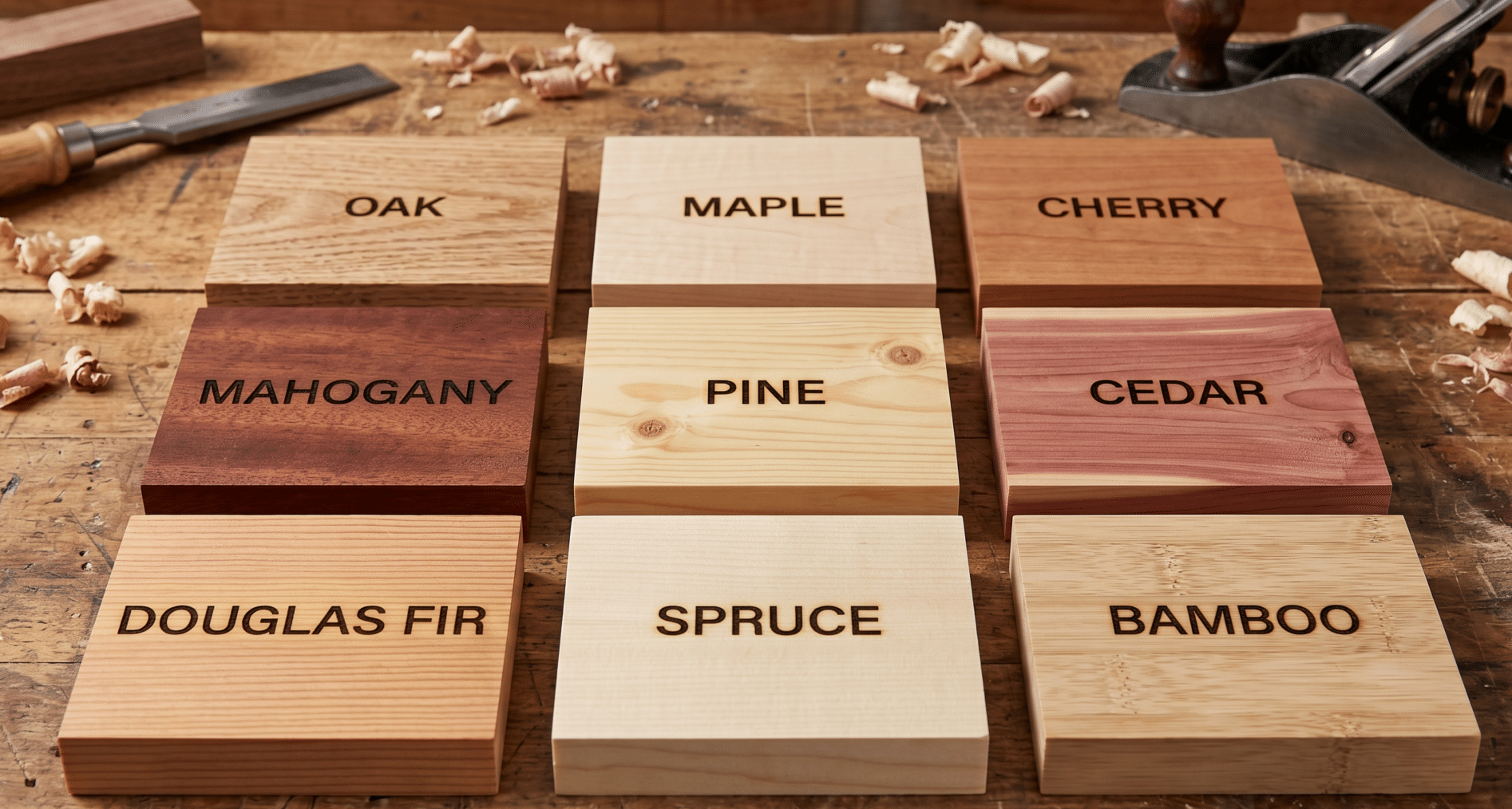
Here are the four best wood species for beginner woodworking projects that balance workability, availability, and cost.
Oak
Oak is one of the most reliable choices in woodworking. It’s strong, stable, and takes stain and finish beautifully. White oak has a tighter grain and handles moisture better — a good choice for tabletops or anything near a sink. Red oak is slightly more open-grained, a little easier to find at most lumber yards, and often slightly cheaper.
Oak also has a distinctive ray pattern — those subtle flecks you see running across the face grain — that becomes a design feature in its own right when quarter-sawn. If you’ve ever seen a traditional craftsman-style piece of furniture with that characteristic figuring in the wood, it was almost certainly oak.
The downside: oak is hard, which means it can blunt your tools faster than softer species. Keep your blades sharp, pre-drill your screw holes to avoid splitting, and use a sharp chisel rather than forcing cuts.
Best for: dining tables, shelving, flooring, cabinets.
Maple
Maple is dense, smooth-grained, and produces a clean, consistent surface. It’s a favourite for cabinets and cutting boards because it doesn’t absorb odours and holds up to heavy use. Hard maple is one of the toughest domestic hardwoods available — it’s what most bowling alleys and dance floors are made from.
One watch-out: maple’s tight grain can be tricky to stain evenly. A pre-conditioner applied before staining will help prevent blotchy results.
Best for: cabinets, cutting boards, workbenches, flooring.
Cherry
Cherry is the “treat yourself” wood for many beginners who’ve built a few projects and want to step up. It’s medium-hard, works smoothly with both hand tools and machines, and has a naturally warm reddish-brown colour that deepens beautifully with age and light exposure. A cherry piece that looks pleasant when first built often looks genuinely stunning after a year of ageing.
It’s one of the most satisfying woods to work with — it cuts cleanly, sands easily, and takes an oil finish exceptionally well. One practical tip: avoid leaving cherry in direct sunlight during the build, as uneven light exposure can cause patchy colour development before the finish is applied.
Best for: fine furniture, boxes, small decorative projects, frames.
Mahogany
Mahogany has a long history as a premium furniture timber, and for good reason. It’s exceptionally stable — meaning it resists warping, shrinking, and expanding with humidity changes better than almost any other species. That stability makes it a dream to work with, especially for projects that need tight tolerances like drawers and cabinet doors.
It’s easy to cut and carve, and it finishes to a deep, rich lustre. It’s also naturally resistant to rot and insects, which makes it a good option for higher-end outdoor furniture. The interlocking grain gives it a subtle shimmer when the light catches it at an angle.
The main drawback is cost — genuine Honduran mahogany is on the pricier end, and some “mahogany” sold at lumber yards is actually African mahogany or a substitute species. Worth asking your supplier exactly what you’re getting.
Best for: high-end furniture, musical instruments, outdoor feature pieces.
The most useful softwoods for beginners
Pine
Pine is probably the most beginner-friendly wood there is. It’s cheap, widely available, easy to cut with basic tools, and forgiving of mistakes. Most hardware stores carry dimensional pine in standard sizes — 2x4s, 1x6s, and so on — which saves you the hassle of milling your own lumber and makes project planning straightforward.
There are several varieties worth knowing: Eastern white pine is soft and lightweight, great for carving and craft projects. Southern yellow pine is significantly harder and more suitable for structural builds. Radiata pine, common in Australia and New Zealand, sits somewhere in between.
The knots are part of pine’s charm — they add character to rustic and farmhouse-style builds. Just be aware that knots can bleed sap through paint if you don’t seal them first with a shellac-based primer like Zinsser BIN. This step is easy to skip and frustrating to fix later.
Best for: shelves, frames, rustic furniture, practice builds, kids’ projects.
Cedar
Cedar is the go-to for anything going outdoors. Its natural oils make it highly resistant to rot, decay, and insects — no treatment needed for basic outdoor exposure, which is a significant advantage over pine that needs staining or treating to survive the weather.
It’s lightweight and works easily with hand tools, though it’s soft enough to dent if knocked. For outdoor furniture that will get regular use, consider using stainless steel or coated screws — regular screws can react with cedar’s natural tannins and leave dark staining around the fixings.
The distinctive smell is a genuine bonus: cedar naturally repels moths, which is why it’s traditionally used for wardrobes, blanket boxes, and storage chests. If you’re building anything for clothing storage, cedar is worth the slight premium over pine.
Best for: garden furniture, raised beds, fencing, outdoor storage, wardrobes.
Fir (Douglas Fir)
Fir is stronger than most softwoods, which makes it useful when you need structural integrity without the cost of hardwood. It has a straight, consistent grain and takes paint well. You’ll often find it at building suppliers as framing lumber.
For beginner furniture projects, fir can be a great budget option — it’s stiffer than pine and holds screws reliably. It’s also one of the most dimensionally consistent softwoods, meaning the boards you buy are less likely to have significant cupping or bowing than pine of the same grade.
Best for: workbenches, shelving, frames, structural projects.
Spruce
Spruce is light, strong for its weight, and has a fine, even grain. In woodworking it’s most often used for lighter structural work and indoor projects. It’s also the wood of choice for acoustic guitar tops and violin bodies, because it vibrates well — which tells you something about how clear and consistent its grain structure is.
Best for: indoor framing, panelling, light furniture, craft projects.
Eco-friendly wood options worth knowing
Reclaimed timber
Reclaimed wood — salvaged from old barns, factories, wharves, and demolished buildings — is one of the most characterful materials you can work with. The ageing process creates colour, texture, and patina that brand-new timber simply can’t replicate.
It’s also environmentally responsible: you’re giving existing timber a second life rather than adding demand for freshly felled trees. Just be aware that reclaimed wood can contain old nails, screws, or old surface treatments, so inspect it carefully and run a metal detector over it before cutting.
Learn more about working with reclaimed timber
Bamboo
Technically a grass rather than a timber, bamboo grows dramatically faster than trees — some species grow nearly a metre a day — which makes it one of the most renewable building materials available. It’s harder than most softwoods, dimensionally stable, and increasingly available in sheet form for flooring, panels, and furniture components.
If sustainability matters in your workshop choices, bamboo deserves a place in your material rotation. Look for bamboo sheet products at flooring suppliers or specialist timber merchants — it’s becoming easier to source as demand grows.
Look for timber certified by the Forest Stewardship Council (FSC).
How to choose the right wood for your project
Run through these four questions before you buy:
1. What is this project for?
Indoor furniture? Choose hardwood for durability and appearance. Outdoor structure? Cedar or treated pine. Structural framing? Fir or spruce. Practice build? Any cheap pine will do. Matching the wood to its end use will save you money and prevent headaches down the track.
2. What tools do you have?
Harder woods need sharper, more powerful tools. If you’re working with basic hand tools — a hand saw, chisels, and a mallet — stick to softwoods for your first few builds. Cutting through hard maple with a dull hand saw is a miserable experience. Once you’ve added a decent table saw or router to your setup, harder species become much more manageable.
3. What’s your budget?
Hardwoods cost significantly more than softwoods, sometimes three to five times the price per board foot. For a beginner learning the craft, there’s no shame in starting with pine — master the joinery and finishing first, then treat yourself to cherry or maple when the skills are there. Wasting expensive timber on early mistakes is demoralising and unnecessary.
4. What’s available locally?
Check your local lumber yard before committing to a species. Availability varies considerably by region, and buying local usually means lower cost and fresher timber with less travel stress on the boards. Some species that are common in North America are expensive imports elsewhere, and vice versa.
Tips for buying good boards at the lumber yard
Knowing which species to use is only half the job — you also need to buy good individual boards. Here’s what to check before you carry anything to the register:
Check for straightness
Sight down the length of each board before buying. Cupping (where the edges curl up), bowing (where the board curves along its length), or twisting will cause problems when you try to join pieces together. Minor movement can sometimes be planed out, but severe warping is hard to correct and will compromise your finished project.
Check the moisture content
Wood that hasn’t dried properly will shrink and warp after you build with it. Ask if the timber has been kiln-dried (KD) and ideally check the moisture content with an inexpensive moisture meter. For indoor furniture, aim for 6–8%. Wood above 12% moisture should be left to acclimatise in your workshop before you use it.
Buy a little extra
A common beginner mistake is buying exactly the amount of timber listed in a plan. Always add 10–15% to account for waste, off-cuts, and the occasional mistake cut. Running out of timber mid-project and having to buy a second batch — which may not match in colour or grain — is avoidable with a small buffer.
Look at the grain direction
For pieces that will be glued together or jointed, matching grain direction helps with planning and reduces tear-out. Take a moment to look at each board and think about which face you want visible in the finished piece. Understanding how wood grain direction affects your cuts and finishes is one of those skills that pays off across every project you’ll ever build.
Ready to start building?
Finding the best wood for beginner woodworking projects comes down to matching your material to your skill level, tools, and budget. A good plan tells you exactly how much timber to buy, how to cut it, and how the pieces join together. Without one, even the right wood choice won’t save you from a build that doesn’t come together.
If you’re looking for a structured library of beginner-friendly woodworking plans, our Ted’s Woodworking review covers one of the most comprehensive plan packages available — over 16,000 projects across every skill level, each with a full materials list and cutting diagrams.
Related guides
- Understanding wood grain — how it affects your cuts and finishes
- Essential woodworking tools every beginner needs
- Joinery Techniques for Beginners
- How to Choose the Right Woodworking Plan 7 Smart Tips